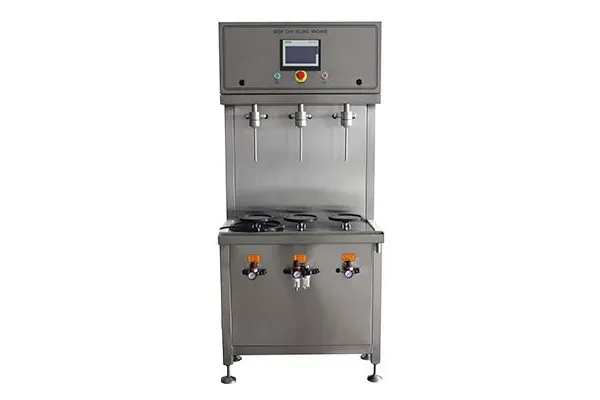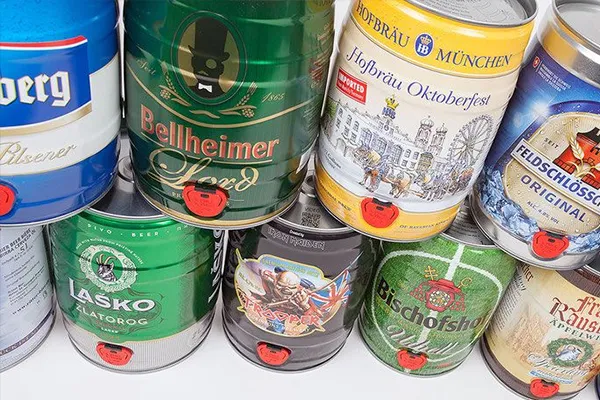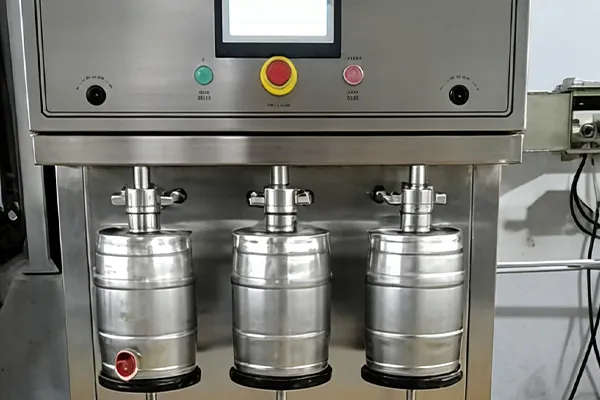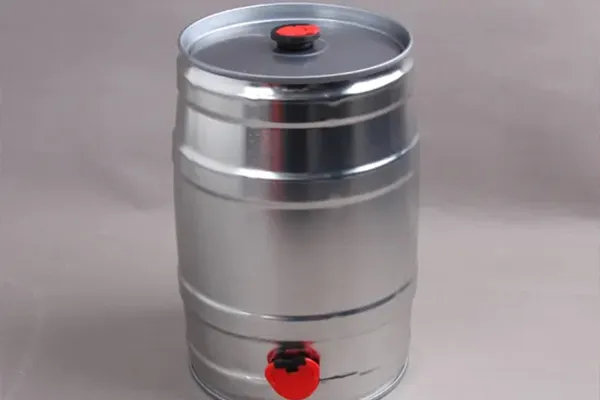



Designed for 1L and 2L tinplate kegs, this semi-automatic filler combines isobaric filling, CO₂ back-pressure control, and compact station-based layout to support low-oxygen packaging for specialty beer and beverage projects.


1L / 2L Tinplate Kegs
4 / 6 / 8 Stations
120–500 Kegs/H
CO₂ Back-Pressure + Isobaric Filling
This model is intended for producers that need a practical filling solution for small-format tinplate kegs without moving directly to a large fully automatic line. It supports more controlled filling, cleaner pressure management, and flexible capacity selection through 4-station, 6-station, and 8-station versions.
We can provide layout suggestions, utilities lists, and integration notes to reduce on-site commissioning time.
For this type of equipment, the most important early comparison points are station count, hourly output, package format, and whether the machine will be used as a stand-alone semi-automatic workstation or as part of a broader packaging layout.
| Model Option | Station Count | Production Capacity | Applicable Keg Size | Suitable Use |
|---|---|---|---|---|
| Compact Semi-Automatic Filler | 4 Stations | 120–200 kegs/hour | 1L / 2L | Entry-level production, pilot packaging, or lower-volume specialty runs |
| Mid-Capacity Semi-Automatic Filler | 6 Stations | 240–360 kegs/hour | 1L / 2L | Growing beverage projects requiring higher output without full-line automation |
| Higher-Capacity Semi-Automatic Filler | 8 Stations | 400–500 kegs/hour | 1L / 2L | More stable medium-volume packaging where faster turnover and consistency are required |
The machine uses isobaric filling together with CO₂ back-pressure control. This is especially relevant where oxygen pickup, foam control, and stable liquid level matter more than simple liquid transfer speed.
The main machine structure is manufactured in food-grade SUS304 stainless steel, which is the practical baseline for beverage-contact equipment requiring corrosion resistance, cleanability, and long-term structural reliability.
The equipment applies an isobaric filling method with CO₂ back-pressure control and an independent pressure-holding system. This combination is more suitable for keg packaging where oxygen ingress, foam behavior, and fill consistency require closer control.
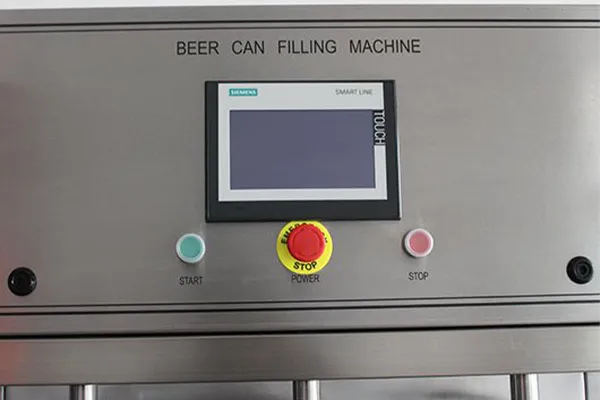
The overall machine design remains compact and straightforward to operate, making it suitable for packaging areas where space is limited but a more professional filling routine is still required.
The machine can be configured according to actual production needs rather than forcing the project around one fixed format. This is useful when output targets, supporting processes, or layout conditions vary between installations.
For 1L and 2L tinplate keg packaging, the filling method has a direct effect on oxygen pickup, foam management, and final package stability. A pressure-managed filling system is usually preferred where product freshness and presentation matter.
For projects that still need operator involvement, frequent product changeover, or a lower initial investment than a full canning or kegging line, a semi-automatic station-based machine is often a more practical fit.
Explore other brewery equipment models by capacity to match different production goals and future expansion plans.
We’re not only a supplier—we support your brewery project from system configuration to commissioning and long-term operation. As a brewery equipment manufacturer, we focus on process compatibility, hygienic build quality, and scalable system design.
Configuration based on brewing workflows, not generic tank lists.
Layouts, utilities lists, and integration notes for your site.
Better cost control, faster response, clearer accountability.
Training, spare parts guidance, and expansion planning support.
Malt Handling → milling & transfer preparation
Brewhouse → mash/lautering + boil/whirlpool
Cooling & Transfer → heat exchange to fermentation temp
Fermentation → jacketed conical fermenters for stability
Conditioning (Optional) → BBT / maturation
CIP → clean-in-place hygiene standardization
Packaging (Future-ready) → keg/bottle/can integration
Choose a brewery layout that supports cleanability, stable fermentation temperature control, and planned expansion (more fermenters / BBT / packaging).
This semi-automatic tinplate keg filler is better suited to projects where package format, product freshness, and controlled filling matter more than maximum line speed. The following scenarios are the most natural fit for this equipment type.
Key technical points for system confirmation and configuration clarity.
It is designed specifically for 1L and 2L tinplate kegs. It is not intended for larger kegs, so tell us the container size you use if it is different, and we will advise on other fillers.
The range is 120 to 500 kegs per hour depending on the 4-, 6- or 8-station version. Real output also depends on keg size and how many operators run the semi-automatic cycle. Share your target and we will recommend the station count.
Isobaric filling equalizes pressure in the keg and the filler before liquid flows, so beer flows without excessive foam and picks up less oxygen. CO2 back-pressure and an independent pressure-holding system keep conditions steady and help avoid overflow.
Yes. The connection type, keg volume, voltage, gas circuit and control can be adjusted, and options such as automatic keg loading and CIP cleaning can be matched to the project. Customization may extend lead time slightly.
It is a practical step for small-format kegs without a large automatic line, up to about 500 kegs per hour. For higher volume or lower labor, you can upgrade to automatic loading or a larger line. Tell us your target.
Rinse and clean the product contact parts before and after filling and sanitize with food-safe chemicals at the temperature recommended in the manual. SUS304 construction is easy to wash. Avoid chemicals that attack seals. CIP options are available.
If you are evaluating this machine for a beverage project, the most useful early inputs are package format, target hourly output, filling method expectations, and whether optional loading or CIP functions are required. This helps define the right station configuration and project scope faster.
We can design theSemi-Automatic Tinplate Kegs Filler system to be packaging-ready (keg/bottle/can integration) to avoid future rework.
Fill in the essentials—our team will respond with a technical proposal.
Tip: Attach layout drawings and utilities list for faster engineering confirmation.
Our team will reply using the contact details you provide. Please check your inbox and spam folder for our response.
*We respect your privacy. All information submitted is strictly confidential.
Your details will only be used to respond to your inquiry. We never send unsolicited emails or promotional messages.