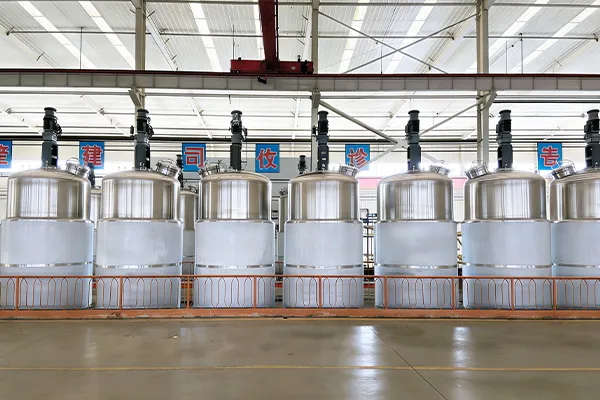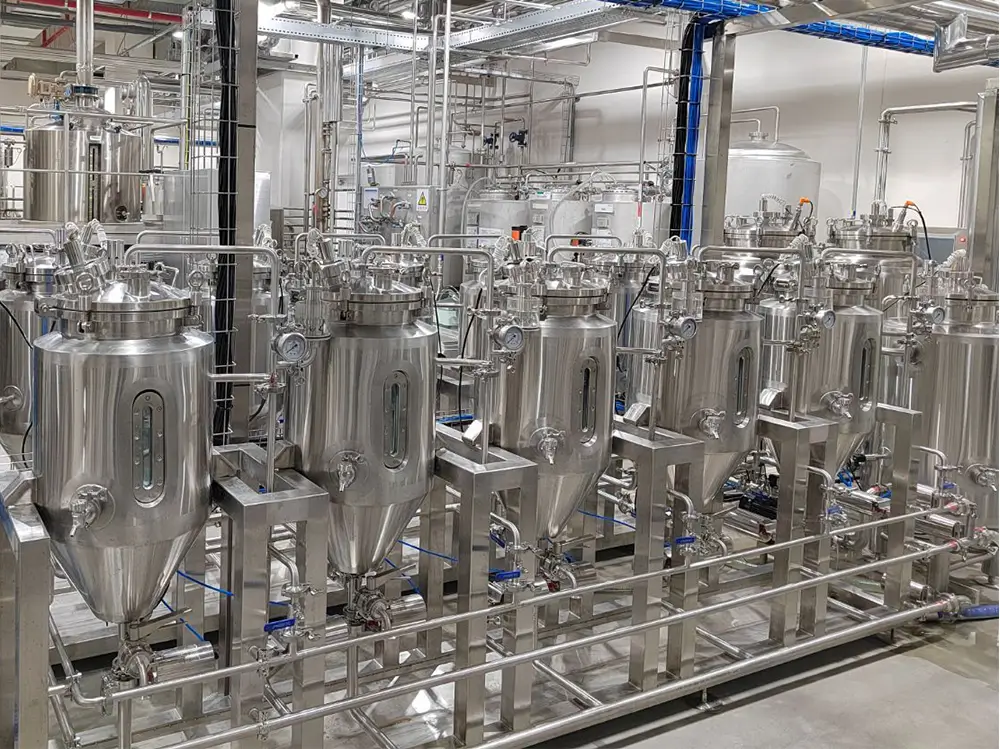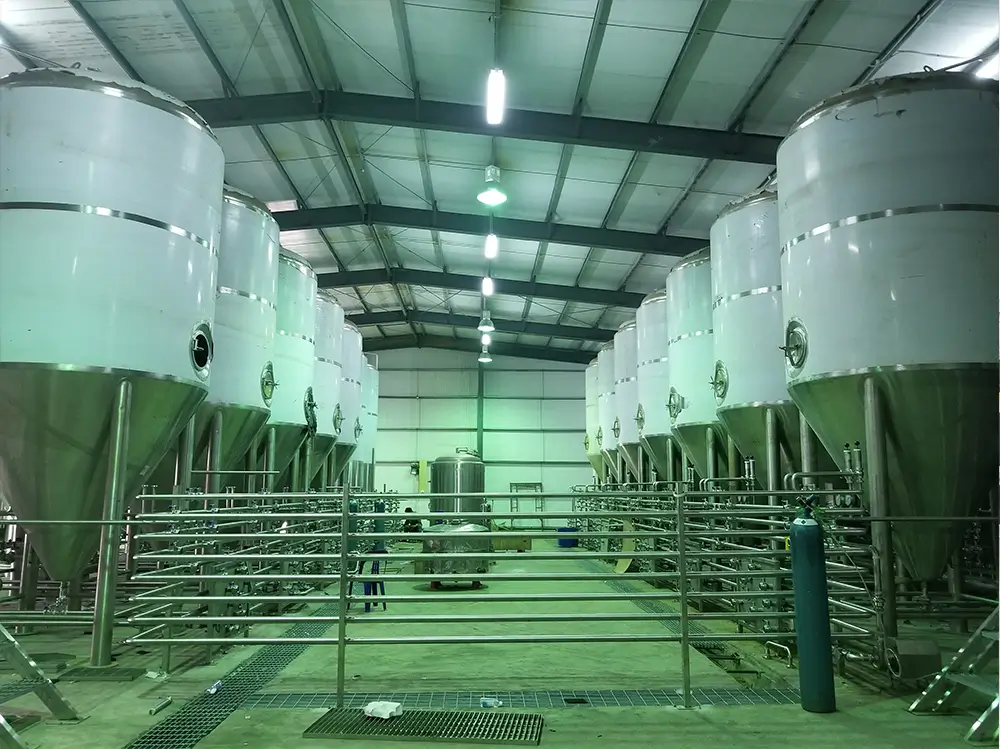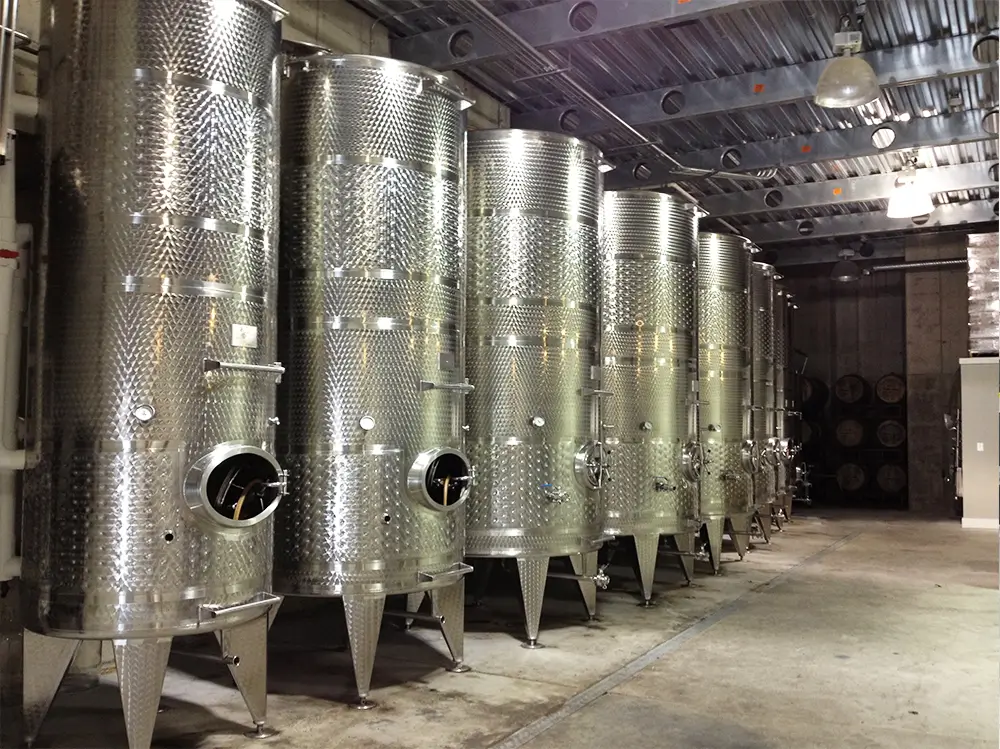

Custom stainless steel stirred-tank bioreactors and fermenters for microbial fermentation, cell culture, biopharma and bio-manufacturing. SIP-sterilisable 316L product contact, laser-welded jackets, kLa-sized agitation, pH / DO control and IQ/OQ documentation.
Volumen de trabajo: 5 L-200 m3 | Sterilisation: SIP 121-134 C
Product contact: 316L, Ra <= 0.4 um | Documentation: IQ/OQ and FAT
Purpose-built vessel and process-equipment shop in Jinan.
Design, fabrication, installation and commissioning.
Hygienic product-contact construction and traceable materials.
Export engineering and pressure-vessel documentation.
International project delivery and support experience.
The organism, product, oxygen demand, shear sensitivity and validation route determine the vessel type and the supporting skid package.
5 L-300 L vessels for process development, media studies and pilot campaigns. SIP-ready options, sanitary sampling and scalable instrumentation.
Seed trains from laboratory scale to production inoculation, with controlled transfer, sterile air and repeatable batch records.
1 m3-200 m3 microbial production fermenters sized on oxygen demand, broth rheology, kLa and heat load.
Low-shear agitation, gentle sparging, tight temperature control and cleanable sterile boundaries for mammalian or insect cells.
Low-shear gas-driven circulation for selected organisms, products and cell-culture duties where mechanical agitation is not preferred.
Supporting vessels, preparation tanks and utility skids for media, buffer, cleaning and steam-in-place sequences.
Every penetration through the sterile boundary is treated as a process decision. We define the boundary, the SIP cycle, the cleanability and the documentation before fabrication.
A bioreactor is a pressure vessel with one extra requirement: nothing gets in. SIP coverage, drainability, slope, sanitary dead-leg control and sterile air protection are designed as one boundary.
Condensate drains from every low point, lines slope at least 1:100, and the vessel holds positive pressure with sterile air after cooling.
316L contact surfaces, orbital or automatic welding, Ra <= 0.4 um finish, sanitary fittings and passivation records support repeatable cleaning.
We calculate from your real process data rather than quoting a motor and impeller from vessel volume alone.
Oxygen is what actually limits your batch. We size the vessel and sparger from OUR, broth viscosity, gas rate, kLa and the DO set point.
Rushton, pitched-blade, hydrofoil, marine and custom impellers are selected for the organism, shear envelope, power per volume and mixing time.
Sparger geometry and gas velocity set the interfacial area. We check dispersion, flooding, foam and gas hold-up before quotation.
Fermentation makes heat. Jacket area, utility flow, insulation and the expected metabolic load are checked against the batch profile.
Required inputs: working volume, peak OUR or DO demand, broth viscosity, organism or cell type, aeration, agitation, feeding strategy, target temperature and sterilisation cycle.
Final dimensions, motor rating and instrumentation are calculated from your process data and validated against the approved URS and P&ID.
| Scale | Working volume | Typical duty | Agitation / control |
|---|---|---|---|
| Bench | 5-30 L | Organism screening and media studies | Small impeller, pH / DO / temperature |
| Pilot | 50-300 L | Scale-up and pilot campaigns | SIP, sterile air, kLa study |
| Seed | 0.3-5 m3 | Inoculum train and transfer | Controlled agitation, SIP, transfer panel |
| Production | 5-200 m3 | Microbial or cell-culture production | PLC / HMI, recipe, batch records, IQ/OQ |
Siemens or Mitsubishi PLC with HMI or SCADA, closed loops for temperature, pH, dissolved oxygen, agitation, vessel pressure and air flow. Probes from Mettler Toledo, Hamilton or your existing brand can be specified.
Product temperature, jacket utility flow, heat load and alarm limits.
Probe, acid / base dosing, calibration and recipe control.
DO cascade through agitation, airflow, oxygen enrichment and back pressure.
Vessel pressure, sterile air by mass flow controller, exhaust and filter integrity.
Foam probe, antifoam dosing, level indication and high-level protection.
Trends, audit trail, recipes, alarms, OPC UA and validation-ready reports.
Inspection hold points keep material, welding, finish, control and test records traceable from plate intake to FAT.
316L heat numbers, thickness, fittings, valves, instruments and certificates are checked before release.
Shell, heads, openings and jackets are formed to the approved GA drawing and tolerances.
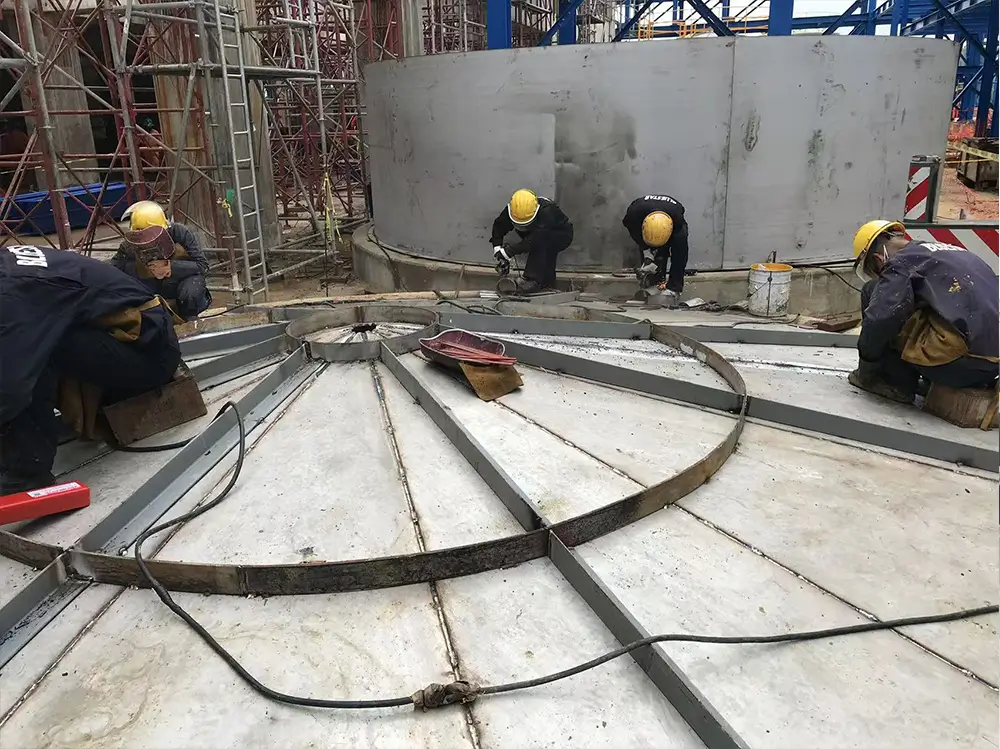
Qualified procedures, controlled heat input, weld maps and traceable operators protect the sterile boundary.
Heating and cooling channels are welded to the calculated pattern and independently tested.
Visual, penetrant, radiographic or borescope examination follows the inspection plan.
Product-contact surfaces are polished, cleaned and passivated to the specified roughness.
Agitator, probes, valves, filters and panels are assembled before vessel and jacket testing.
Pressure, leak, control, mixing time, kLa, sterility hold and documentation checks are completed before shipping.
Pilot, seed, production and fermentation vessels manufactured for brewing, beverage, bio-fermentation and process-equipment projects.
Working volume, organism, OUR, viscosity, DO and pH set points, feeding, aeration and sterilisation.
Process calculation, vessel selection, P&ID, GA drawing and an itemised technical quotation.
Materials, nozzles, control system, documentation and inspection scope are frozen before production.
Traceable construction against the approved URS, P&ID, drawing and quality plan.
Pressure, controls, mixing, kLa, sterility hold and documents are reviewed before packing.
On-site installation, commissioning, training and validation support where required.
Ambos son recipientes destinados a procesos biológicos. Un biorreactor está diseñado para trabajos de cultivo microbiano o celular sometidos a un control riguroso, con esterilización, sensores y agitación a escala kLa. Un fermentador suele ser más sencillo. Los volúmenes de trabajo oscilan entre 5 L y 200 m³. Indícanos cuál es tu organismo y tu proceso.
Los recipientes están diseñados para la esterilización por vapor in situ a una temperatura de entre 121 y 134 °C, por lo que se necesita vapor limpio, un sistema de evacuación de condensado, agua de refrigeración y aire comprimido. Comprobamos los servicios de suministro necesarios para su proceso.
Los circuitos típicos controlan la temperatura, el pH, el oxígeno disuelto, la presión, el nivel y la espuma. La lista exacta depende de tu proceso y se define en el presupuesto.
Las partes en contacto con el producto son de acero inoxidable 316L con interior pulido, camisas soldadas con láser y pasivación. Se suministran materiales trazables.
Podemos facilitar documentación de IQ/OQ, certificados de materiales, registros de soldaduras y ensayos, así como documentos de aceptación en fábrica. Los requisitos dependen de tu organismo regulador, así que indícanos cuál es tu norma.
Agitation and aeration are sized from kLa, and tests are performed to agreed methods. Acceptance criteria are defined in the project documents.
You do not need a finished specification. Send the working volume, organism, oxygen demand, viscosity, agitation, aeration and sterilisation requirements. An engineer will review the duty and return the calculation, P&ID, drawing and itemised quotation.
Email: [email protected]
Phone: +86 15665777029
Factory: No. 9688, Jingshi West Road, Jinan, Shandong, China
Nuestro equipo te responderá utilizando los datos de contacto que nos hayas facilitado. Por favor, comprueba tu bandeja de entrada y la carpeta de correo no deseado para ver si has recibido nuestra respuesta.
*Respetamos tu privacidad. Toda la información facilitada es estrictamente confidencial.
Tus datos solo se utilizarán para responder a tu consulta. Nunca enviamos correos electrónicos no solicitados ni mensajes promocionales.