
Logotipo de METO Equipment

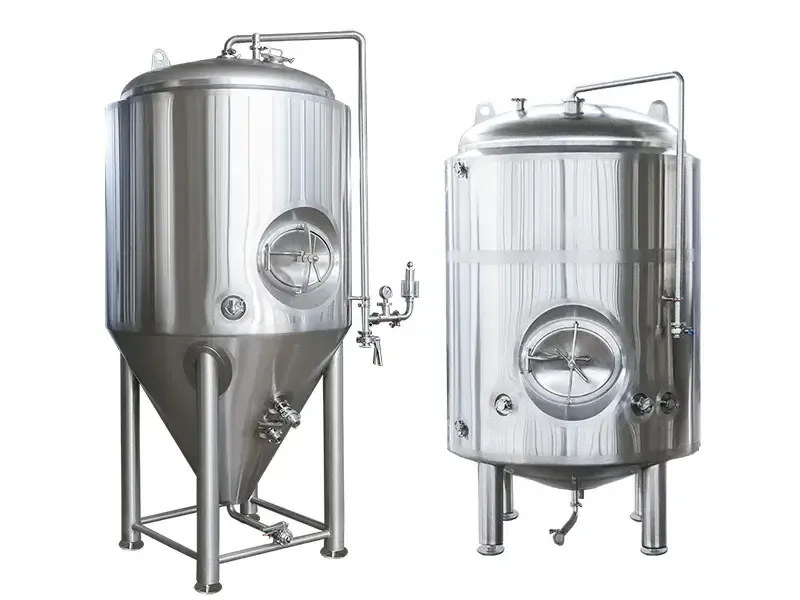
2500L Fermenter ​

2500L Fermenter

(25HL Fermentation Tank)

A production-ready conical stainless steel fermentation tank engineered for stable temperature control, hygienic operation, and repeatable batch results. Designed with dimple jacket cooling, sanitary TIG welding, and validated pressure/leak testing for export-oriented brewery projects.

  • Engineer-friendly specs (capacity / size / thickness / tests)
  • Hygiene-first build (0.4 μm + CIP coverage)
  • Integration-ready (glycol / CIP / cellar piping)

Before You Source a 2500L Fermenter, Confirm These 3 Things

Purchasing teams don’t just buy a tank — they buy fermentación repetible, hygienic uptime, y low commissioning risk.

1) Can engineering validate performance fast?

Clear capacity, dimensions, thickness, insulation, jacket area, and test parameters let engineers confirm site-fit and cooling logic without back-and-forth.

  • 25HL effective / 34HL total (+25% headspace)
  • Φ1560 × 3500mm for installation planning
  • 6.59㎡ jacket area for cooling response

2) Will sanitation reduce contamination risk?

Hygiene is a design outcome: polished surface, CIP coverage, sanitary connections, and fewer dead zones.

  • Interior polish 0.4 μm
  • 360° rotating CIP ball
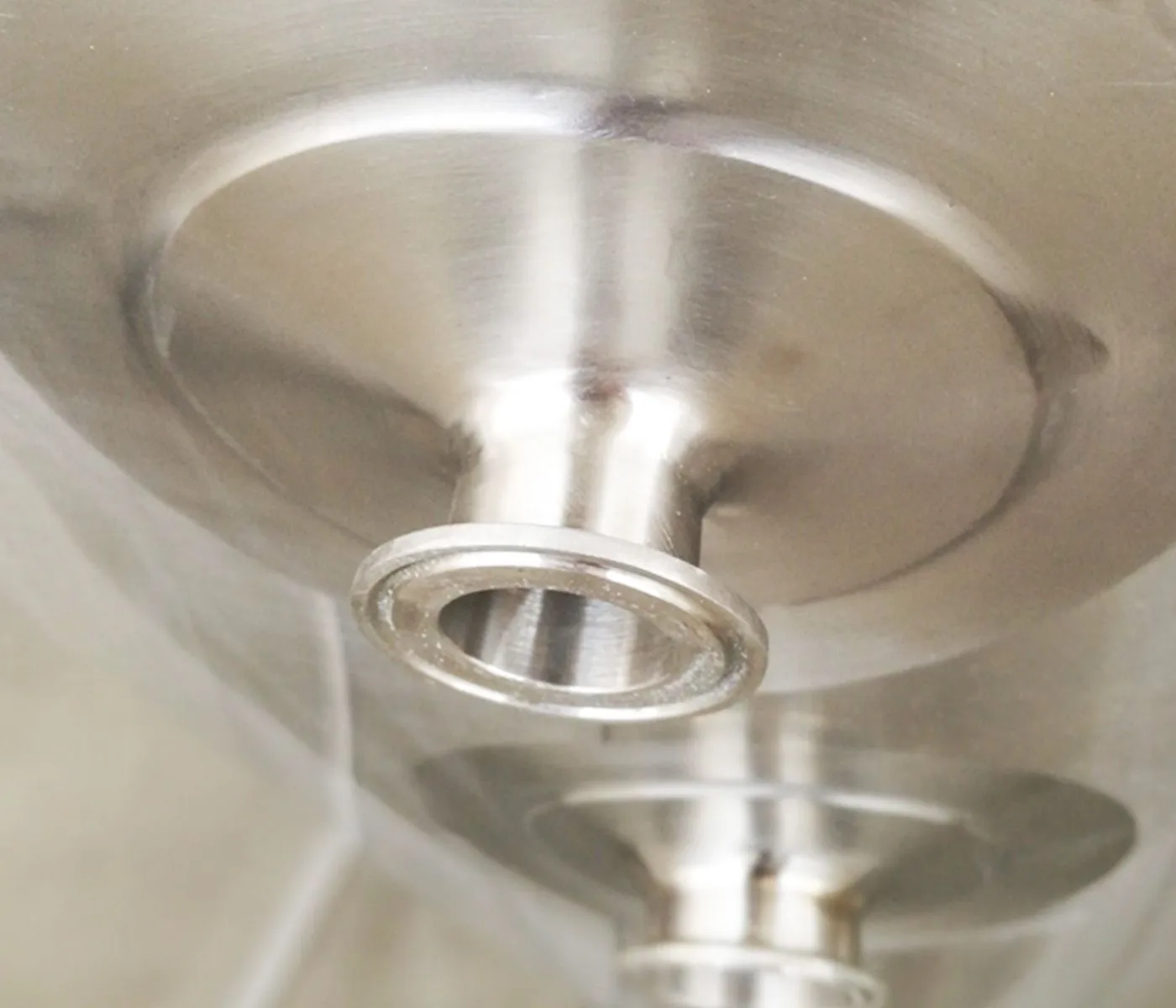
  • Tri-clamp sanitary connections

3) Can safety & testing be documented?

Defined pressure/leak tests reduce project risk and help with customer acceptance, audits, and commissioning confidence.

  • Tank test: 0.2MPa
  • Jacket test: 0.4MPa
  • 24-hour leak test

Para equipos de ingeniería

Podemos ofrecer sugerencias de diseño, listas de servicios y notas de integración para reducir el tiempo de puesta en marcha in situ.

Quick Specifications

Fast confirmation for integrators and procurement: capacity, footprint, materials, cooling, finish, ports, and tests.

Artículo Especificaciones
Fermenter Type Conical fermentation tank (60° cone bottom)
Capacidad Effective 25HL (2500L) • Total 34HL (+25% headspace)
Dimensions Φ1560 × 3500mm
Material / Thickness Inner SUS304 3mm • Outer SUS304 2mm
Aislamiento PU 80 mm
Camisa de refrigeración Dimple jacket on cone & cylinder • Area 6.59㎡
Acabado superficial Interior polish 0.4 μm
Testing 24h leak test • Tank test 0.2MPa • Jacket test 0.4MPa
Presión de trabajo < 0.2MPa
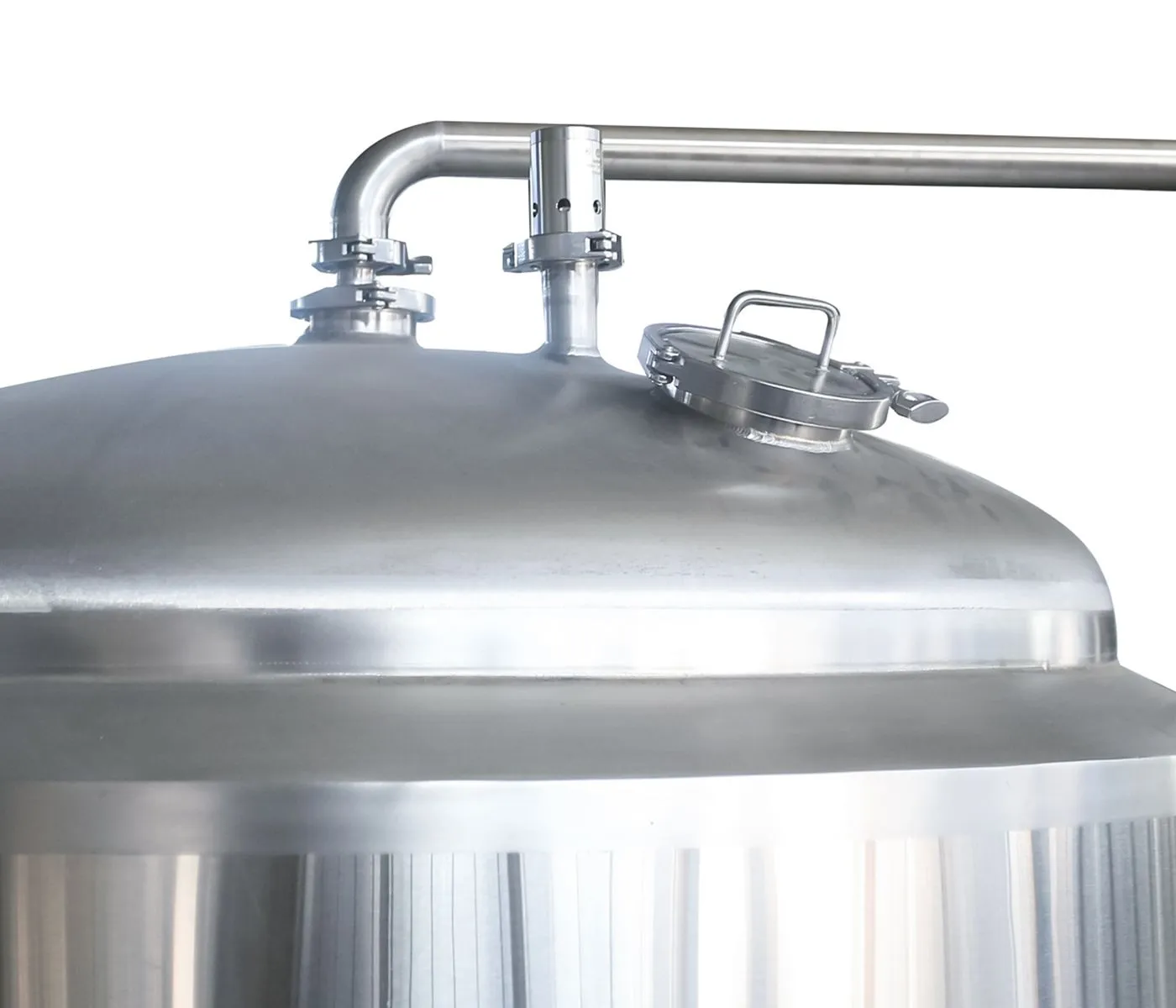
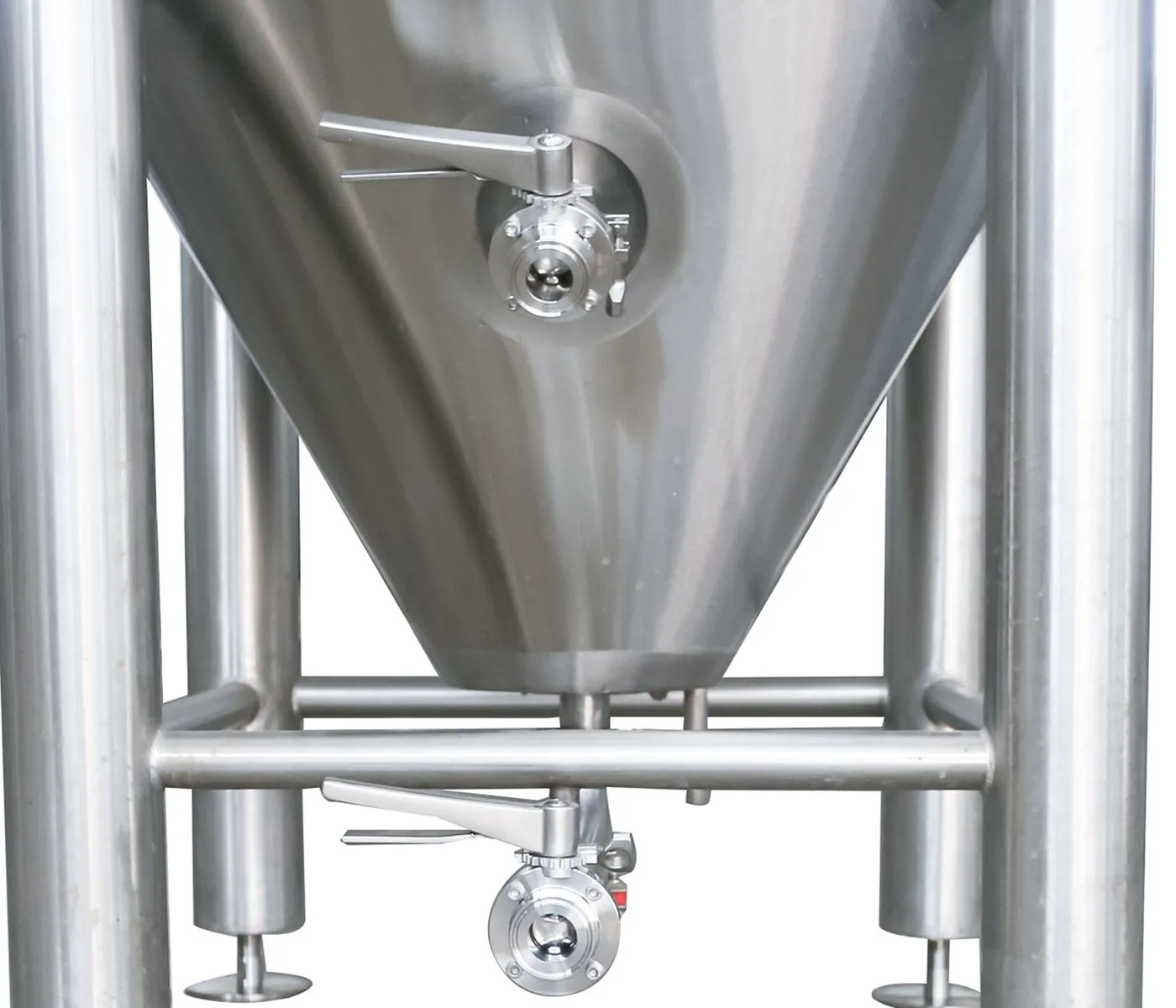
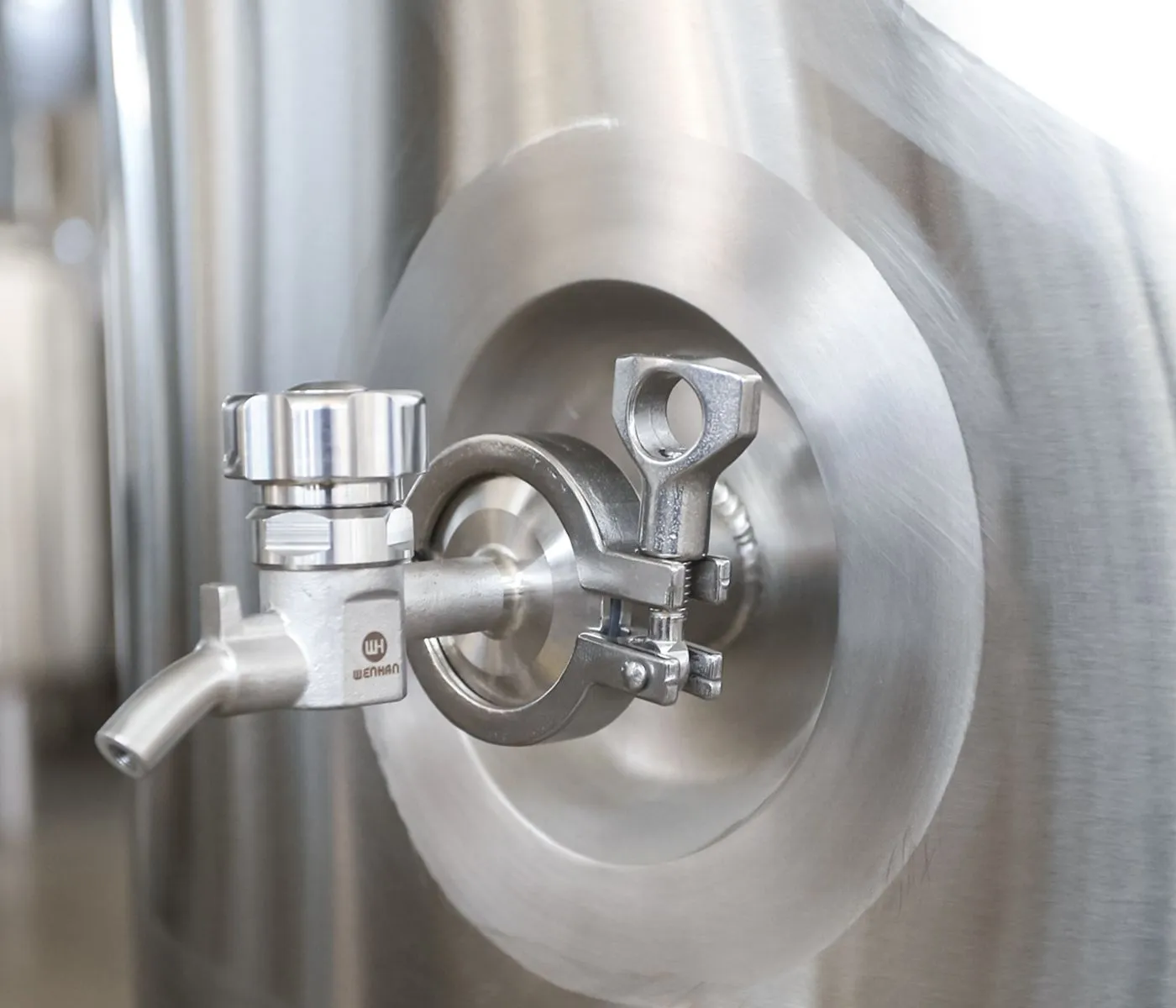
Standard Ports Side pressure manway • PT100 • PRV & safety valve • 360° CIP ball • Sampling valve • Racking arm • 4″ dry hop port
Conexiones Tri-clamp sanitary connections

Cellar Fit & Installation Planning

A 25HL fermentation tank must fit your ceiling height, service access, and piping routes. These checks help integrators confirm feasibility quickly.

Space & Access Checklist

  • Overall footprint reference: Φ1560 × 3500mm helps confirm door clearance, lifting path, and placement.
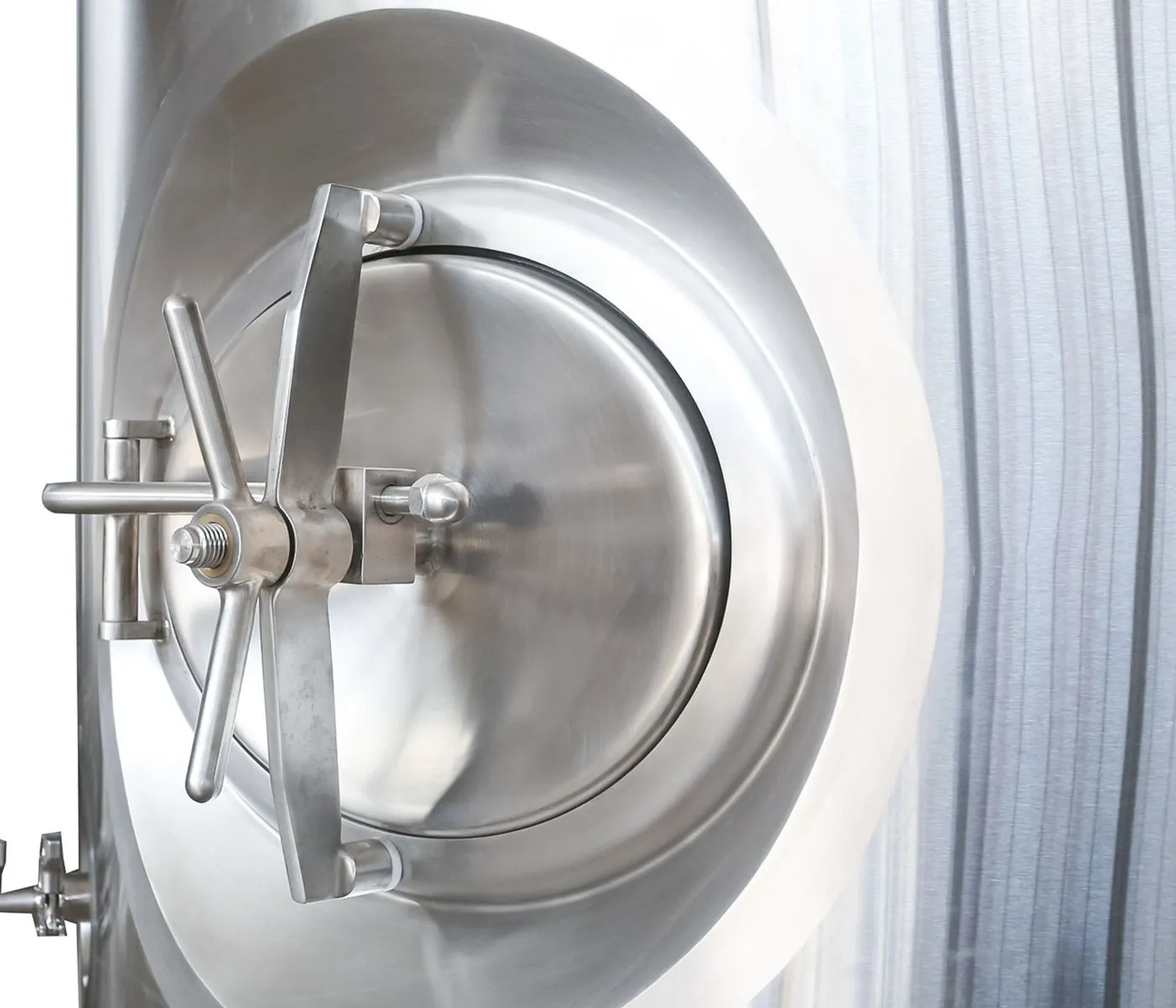
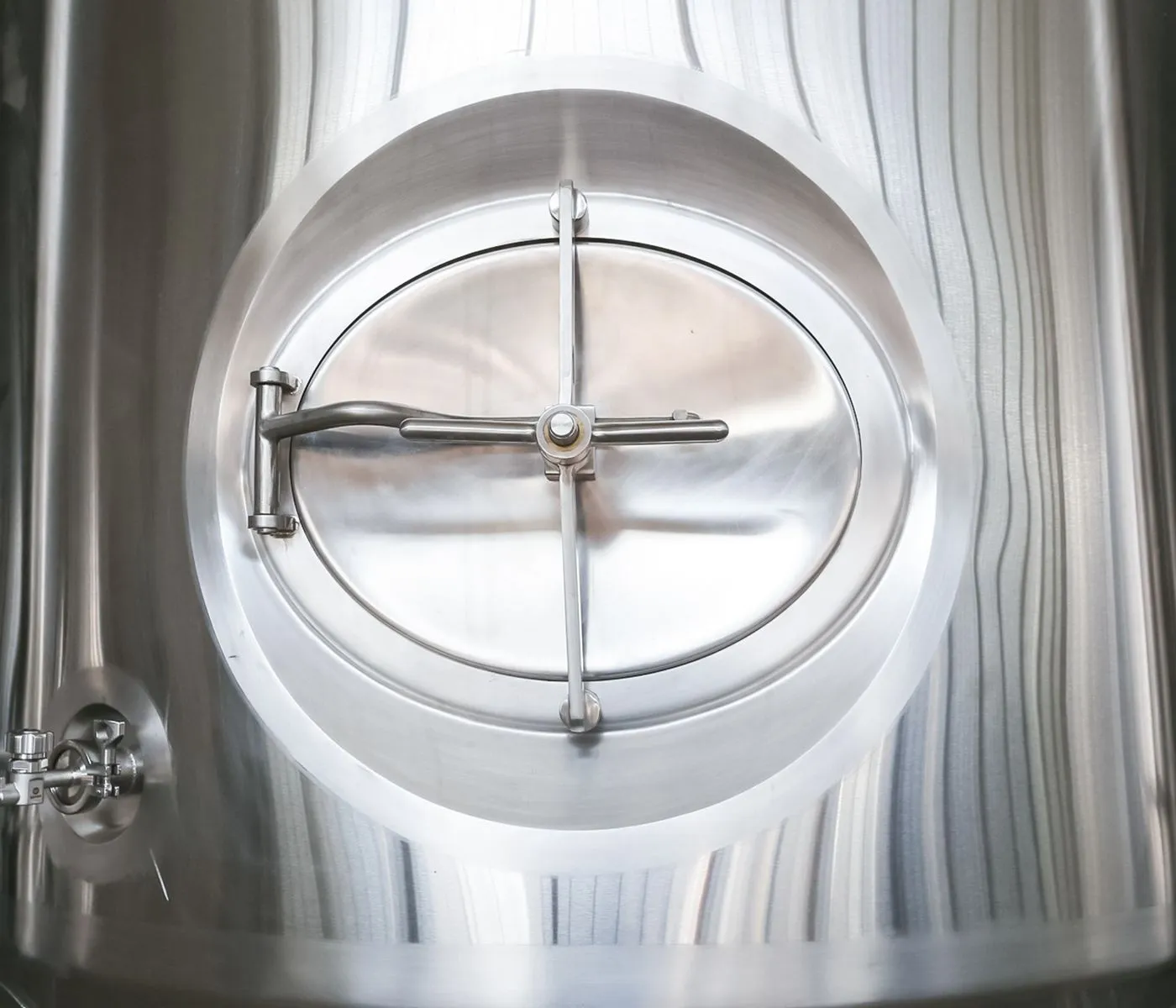
  • Manway maintenance: side pressure manway supports inspection and cleaning access in production environments.
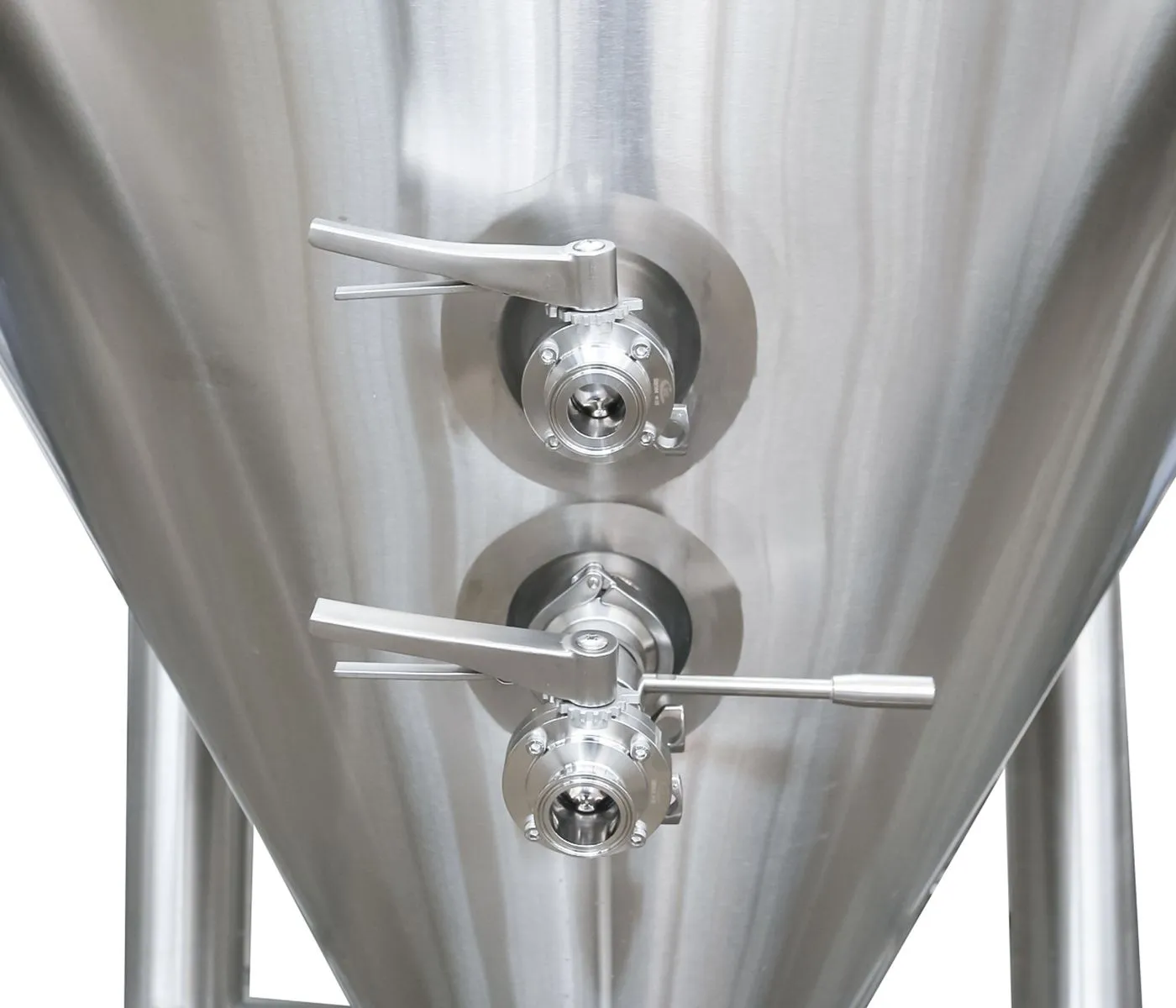
  • CIP & piping routes: plan sanitary tri-clamp lines for CIP return, vent, sampling, and racking arm operation.

Utility & Integration Inputs

  • Glycol connection readiness: dimple jacket on cone & cylinder (6.59㎡) designed for stable temperature control.
  • Temperature signal: PT100 probe supports control system integration for fermentation curves.
  • Safety devices: PRV & safety valve support safe operation under brewery pressure conditions.

Cooling & Temperature Control (Repeatable Fermentation)

Temperature discipline is the foundation of consistent beer quality. This 2500L fermenter uses dimple jacket cooling on both cone and cylinder to maintain stable fermentation behavior and predictable output.

  • Jacket coverage where it matters: cone & cylinder coverage improves heat exchange control across fermentation stages.
  • Defined jacket area: 6.59㎡ provides a clear reference for cooling capacity estimation and chiller matching.
  • Insulation for energy stability: PU 80mm helps reduce heat gain and supports stable setpoint holding.
  • Control-ready instrumentation: PT100 supports automated temperature management and fermentation curve tracking.

Tip for integrators: confirm glycol supply conditions, valve strategy, and control loop response time using the jacket area reference.

Sanitary Design & CIP Efficiency

Cleaning is not a “task”; it is a production uptime factor. The polished interior and 360° CIP coverage reduce dead zones and help shorten turnaround.

  • Acabados interiores: 0.4 μm polishing improves cleanability and reduces residue buildup.
  • CIP coverage: 360° rotating CIP ball supports full-surface cleaning impact.
  • Surface protection: cleaning & passivation enhances corrosion resistance and long-term hygienic stability.
  • Sanitary connections: tri-clamp interfaces simplify disassembly, inspection, and spare-part standardization.

Standard Configuration (What You Get)

Brewing uptime depends on fast, reliable cleaning. Sanitary finish, CIP coverage, and standardized connections help reduce contamination risk and shorten turnaround between batches.

Hygienic Surfaces

  • Interior polish: 0.4 μm for improved cleanability and reduced residue.
  • Sanitary build logic: fewer traps + smoother surfaces = lower microbiological risk.
  • Stainless construction: SUS304 inner/outer shells (3mm / 2mm) for durability and hygiene.

CIP Coverage

  • 360° rotating CIP ball: supports full-surface wash impact and repeatable cleaning cycles.
  • Tri-clamp connections: faster disassembly/inspection, standardized gaskets & fittings.
  • Production benefit: less downtime, faster turnaround, more predictable schedules.

Ports & Brewing Workflow (Built for Real Cellar Operations)

A fermentation tank should match how brewers actually work: sampling, transferring, dry hopping, and yeast management — all while staying sanitary and safe.

Standard Configuration Included

  • Side pressure manway for inspection & maintenance access
  • Sampling valve for QA checks and fermentation monitoring
  • Racking arm for controlled transfer and clarity management
  • 4″ dry hop port with solid end cap (isobaric device optional)
  • 360° rotating CIP ball for consistent cleaning
  • PRV & safety valve for pressure protection
  • PT100 temperature probe for control integration
  • Tri-clamp sanitary connections for standardized installation

Why This Matters to Procurement

  • Faster commissioning: standard ports reduce custom fabrication on-site.
  • Lower spare-part complexity: tri-clamp components simplify stocking and maintenance.
  • Operator efficiency: correct manway/port layout reduces labor and mistakes.

Safety & Testing (Commissioning Risk Reduced)

When sourcing a 2500L fermenter for an export project, buyers typically require defined tests and acceptance references. This tank includes clear pressure/leak validation parameters.

  • Tank pressure test: 0,2 MPa
  • Jacket pressure test: 0.4MPa
  • Leak test: 24-hour leak test
  • Working pressure: < 0.2MPa
  • Protection devices: PRV & safety valve

Procurement note: these parameters help shorten acceptance discussions and support commissioning documentation when required.

Options & Customization (Project-Driven)

Procurement teams often need small changes to match site layout, process preference, or local standards. Share your requirements and we’ll align the configuration.

  • Additional ports or customized port orientation to match cellar piping routes
  • Dry hopping device selection (solid cap included; isobaric device optional)
  • Sensor & control interface alignment for your automation strategy
  • Glycol valve strategy and piping layout planning for stable cooling performance
  • Documentation package alignment for local inspections or third-party acceptance

Project Deliverables (What You Receive)

To accelerate procurement approval and site implementation, we prepare a clear deliverables checklist that supports installation planning and acceptance.

  • Final confirmed specification list (capacity / dimensions / materials / finish / ports)
  • Pressure and leak test references (tank 0.2MPa / jacket 0.4MPa / 24h leak test)
  • Port map alignment for sampling / racking / CIP / dry hop operations
  • Integration notes for glycol and CIP routing (based on project layout inputs)

2500L Fermenter Details

También te puede interesar

Explora otros modelos de equipos para cervecerías según su capacidad, para adaptarlos a los distintos objetivos de producción y a los planes de expansión futuros.

¿Por qué elegir METO?

No somos solo un proveedor: te acompañamos en tu proyecto de cervecería desde la configuración del sistema hasta la puesta en marcha y el funcionamiento a largo plazo. Como fabricante de equipos para cervecerías, nos centramos en la compatibilidad de los procesos, la calidad higiénica de la fabricación y el diseño de sistemas escalables.

Comprensión de los procesos

Configuración basada en los procesos de elaboración de cerveza, no en listas genéricas de depósitos.

Ingeniería a medida

Diseños, listas de servicios y notas de integración para tu sitio web.

Fabricación directa de fábrica

Un mejor control de los costes, una respuesta más rápida y una rendición de cuentas más clara.

Soporte a largo plazo

Formación, asesoramiento sobre piezas de recambio y apoyo en la planificación de la expansión.

Lista de comprobación de calidad (típica)

1

Manipulación de la malta → preparación para el fresado y la transferencia

2

Cervecería → macera/filtración + ebullición/remolino

3

Refrigeración y transferencia → intercambio de calor hasta la temperatura de fermentación

4

Fermentación → fermentadores cónicos con camisa para garantizar la estabilidad

5

Acondicionamiento (opcional) → BBT / maduración

6

CIP → estandarización de las normas de higiene para la limpieza in situ

7

Embalaje (preparado para el futuro) → Integración de barril, botella y lata

Consejo para el comprador

Choose a 2500L Conical Fermenter layout that supports cleanability, stable fermentation temperature control, and planned expansion (more fermenters / BBT / packaging).

Aplicaciones

2500L Fermenters Are Designed for Professional Brewing Environments Where Stable Fermentation, Operational Efficiency, and Future Expansion Matter.

Core Fermentation for Commercial Craft Breweries
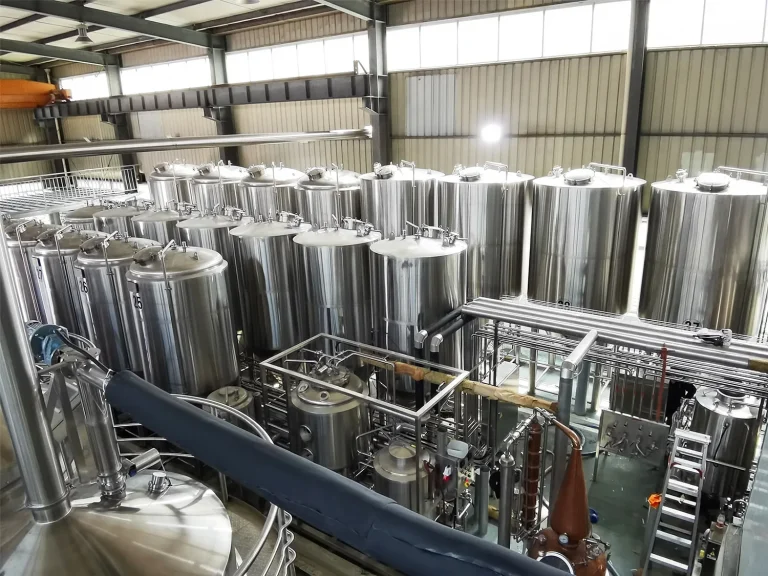
The 2500L fermenter is primarily deployed as the main fermentation vessel in commercial-scale craft breweries, supporting stable batch rotation and predictable weekly production output. Its conical bottom structure, precise temperature control, and hygienic stainless-steel construction ensure consistent yeast performance, repeatable flavor profiles, and reliable fermentation cycles, which are essential for breweries supplying regional distribution or taproom networks.
Descripción de la imagen
Capacity Expansion for Growing Brewing Operations
For breweries transitioning from pilot or nano systems to true commercial throughput, 2500L fermenters provide the optimal balance between production scale, floor-space efficiency, and investment control. Multiple fermenters can operate in staggered fermentation schedules, enabling continuous brewing, improved tank utilization, and scalable production planning without immediately upgrading the brewhouse.
Descripción de la imagen
OEM / Contract Beer Manufacturing & Industrial Pilot Production
The 2500L configuration is also widely used in OEM beer production, private-label manufacturing, and small industrial brewing facilities, where reliability and repeatability are critical for commercial contracts. Its modular compatibility with bright beer tanks, filtration systems, and automated packaging lines allows breweries to move toward full industrial production workflows while maintaining strict fermentation quality control.
Descripción de la imagen

FAQ — 2500L Fermenter (Engineering & Procurement)

Questions buyers commonly ask when sourcing a 2500L fermenter / 25HL fermentation tank for production brewing projects.

Yes. Ports, manway position, piping orientation, jacket layout and sensors can be customized for the 2500L tank. Standard size is Φ1560×3500 mm with 25 hl effective and 34 hl total volume. We confirm any changes by drawing before production.

Each tank is tested at 0.2 MPa, the jacket at 0.4 MPa, followed by a 24-hour leak test. Records can be supplied for acceptance. Our factory holds a D1/D2 pressure vessel license and ISO 9001.

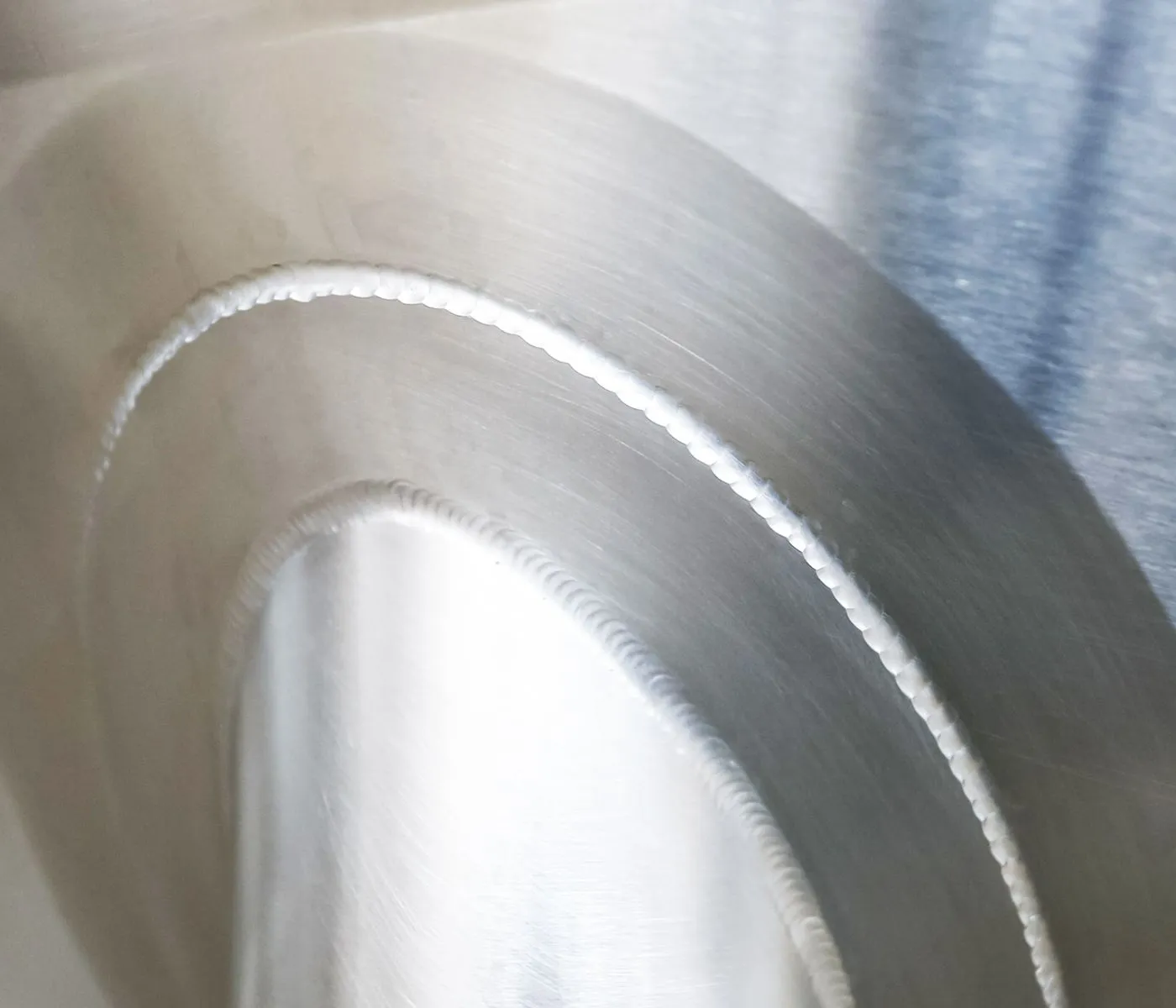
The interior is polished to Ra 0.4 μm, with sanitary TIG welds, a 360° rotating CIP ball and Tri-clamp connections, minimizing dead zones. This reduces contamination risk and makes cleaning fast and repeatable.

A dimple jacket with about 6.59 m² of cooling area responds quickly to glycol, so fermentation temperature stays stable batch after batch. Insulation reduces loss. Your chiller must cover the largest load, which we help calculate.

Send the quantity, effective volume, pressure, port list, jacket needs, destination port, and certification requirements. Our team replies within 8 hours.

Count brews per day or week times fermentation days, add spare capacity and leave 25% headspace. A 25 hl brew fills one tank, so tank count grows quickly with brewing frequency. Send your plan and we will calculate it.

Request a Quote (RFQ Checklist)

Share the information below and we can respond faster with accurate configuration confirmation. This helps reduce rework and speeds up purchasing decisions.

Required for Quotation

  • Fermenter quantity and production plan (current + expansion)
  • Target beer styles and temperature ranges
  • Glycol conditions and preferred valve/piping approach
  • Any extra ports or special workflow needs (dry hop / sampling / transfer)
  • Site constraints: ceiling height, access path, placement plan

Helps Us Respond Even Faster

  • Cellar layout sketch (even a simple one)
  • Preferred control approach (manual / semi-auto / integrated)
  • Local inspection or documentation expectations (if applicable)
  • Timeline target for delivery and installation window

¿Necesitas embalajes pronto?

We can design the 2500L system to be packaging-ready (keg/bottle/can integration) to avoid future rework.

Solicita tu presupuesto

Rellena los datos básicos: nuestro equipo te responderá con una propuesta técnica.

Consejo: Adjunta los planos de disposición y la lista de servicios para agilizar la validación técnica.

Ponte en contacto con METO

Nuestro equipo te responderá utilizando los datos de contacto que nos hayas facilitado. Por favor, comprueba tu bandeja de entrada y la carpeta de correo no deseado para ver si has recibido nuestra respuesta.

*Respetamos tu privacidad. Toda la información facilitada es estrictamente confidencial.

Tus datos solo se utilizarán para responder a tu consulta. Nunca enviamos correos electrónicos no solicitados ni mensajes promocionales.